

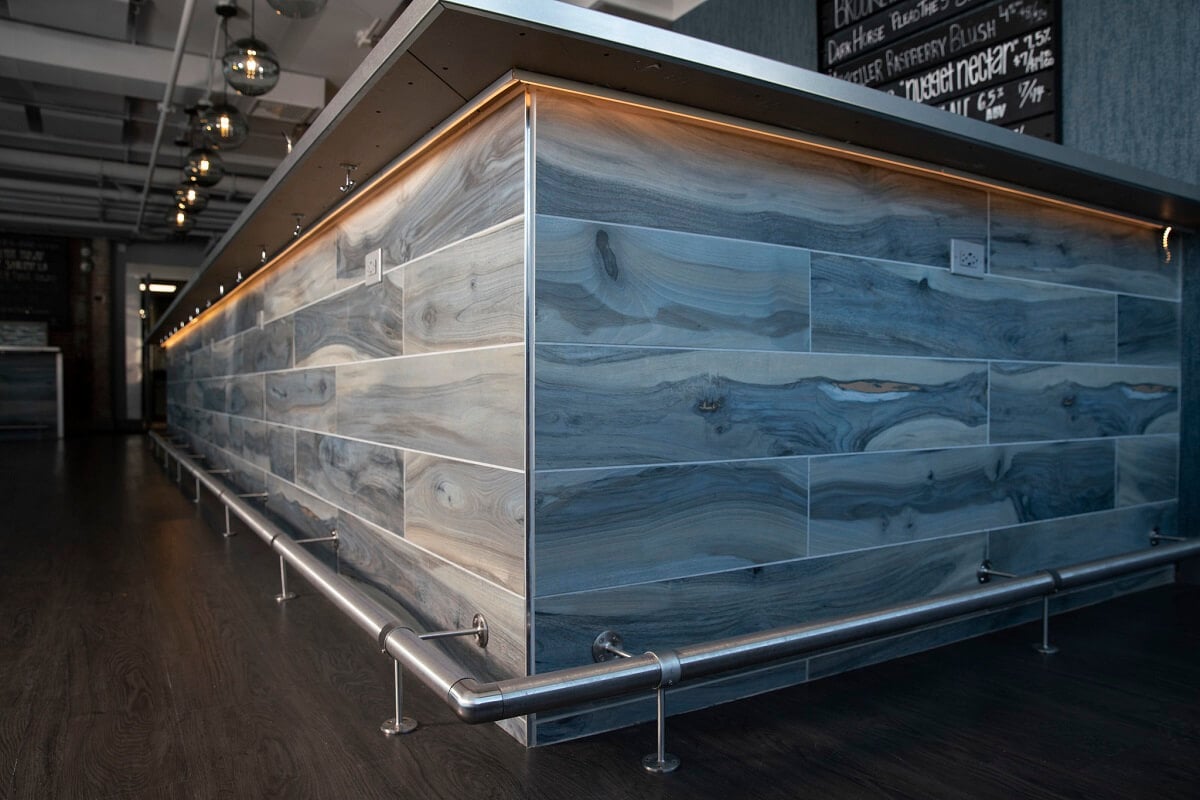
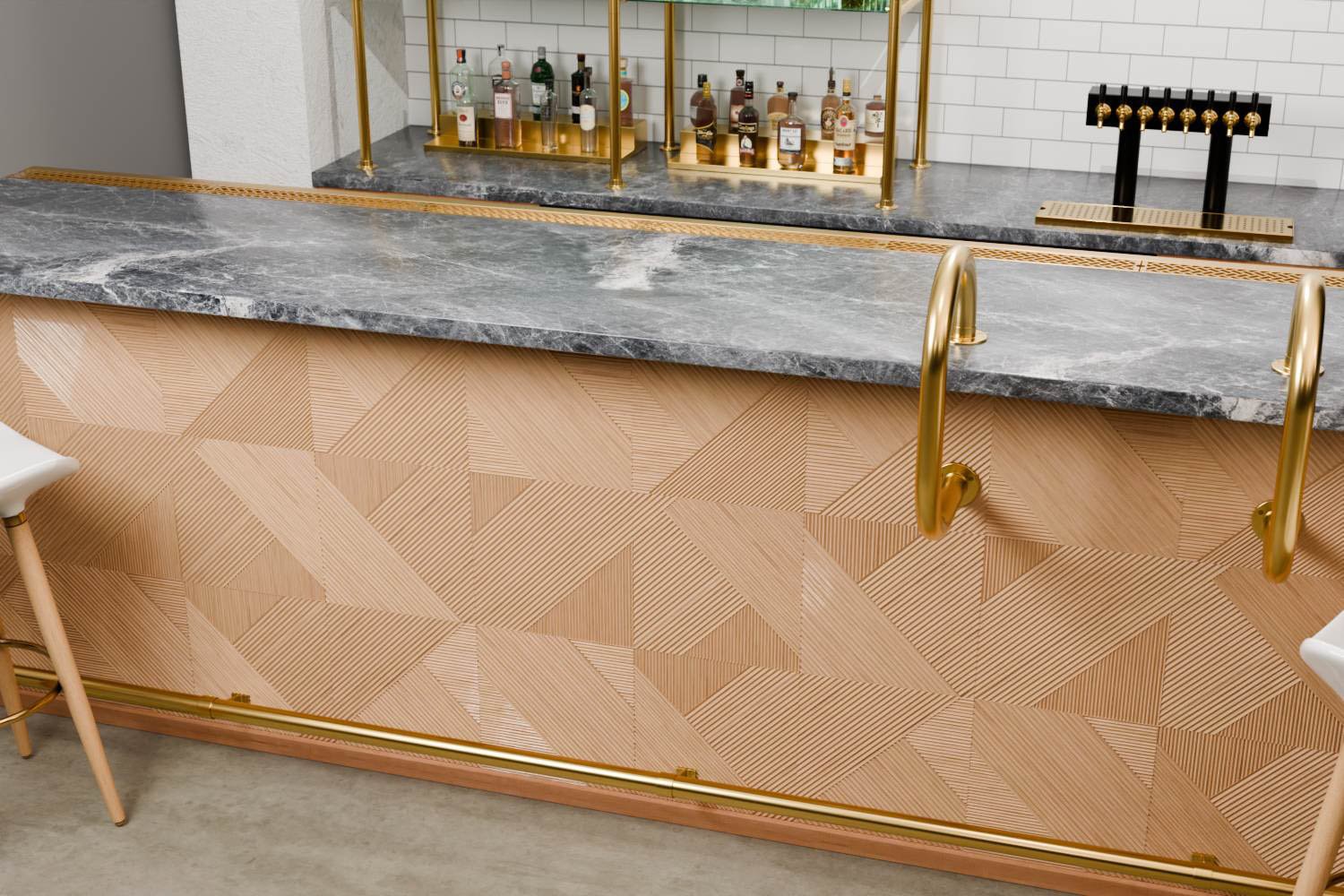
In hospitality design, it’s often the smallest details that shape the entire experience. Architectural metal, whether it’s a seamlessly integrated foot rail, a precision-crafted drink rail, or custom shelving, does more than serve a function. It brings cohesion, elevates materiality, and helps a space feel complete.
For architects and interior designers, specifying architectural metal goes beyond selecting a finish. It requires aligning every element with the broader vision while balancing durability, aesthetics, and how guests interact with the space.
This guide explores how architectural metal supports hospitality design at every level, helping you create environments that feel as intentional as they look.
What Is Architectural Metal in Hospitality Design?
Architectural metal refers to custom or specified metal elements integrated into a built environment to serve both functional and aesthetic purposes. In hospitality spaces, these elements are often the finishing details that unify a design, subtle in their presence but essential to the overall experience.
From bar foot rails to shelving systems, architectural metal plays a critical role in how a space performs, wears over time, and ultimately feels to the people who use it.
How Architectural Metal Shapes the Guest Experience
Not every design choice is immediately noticed, but every design choice is felt.
Architectural metal contributes to that experience in ways that go beyond surface-level design:
- Comfort: A well-placed foot rail provides natural support, improving how guests engage with a space
- Flow: Drink rails and drip trays help maintain cleanliness and efficiency without disrupting the design
- Cohesion: Finish-matched metal elements create visual consistency across materials and surfaces
These are the details that quietly support your design intent—bringing together form and function so the space feels resolved, intentional, and complete.
Key Types of Architectural Metal in Bar & Hospitality Design
Bar Foot Rail
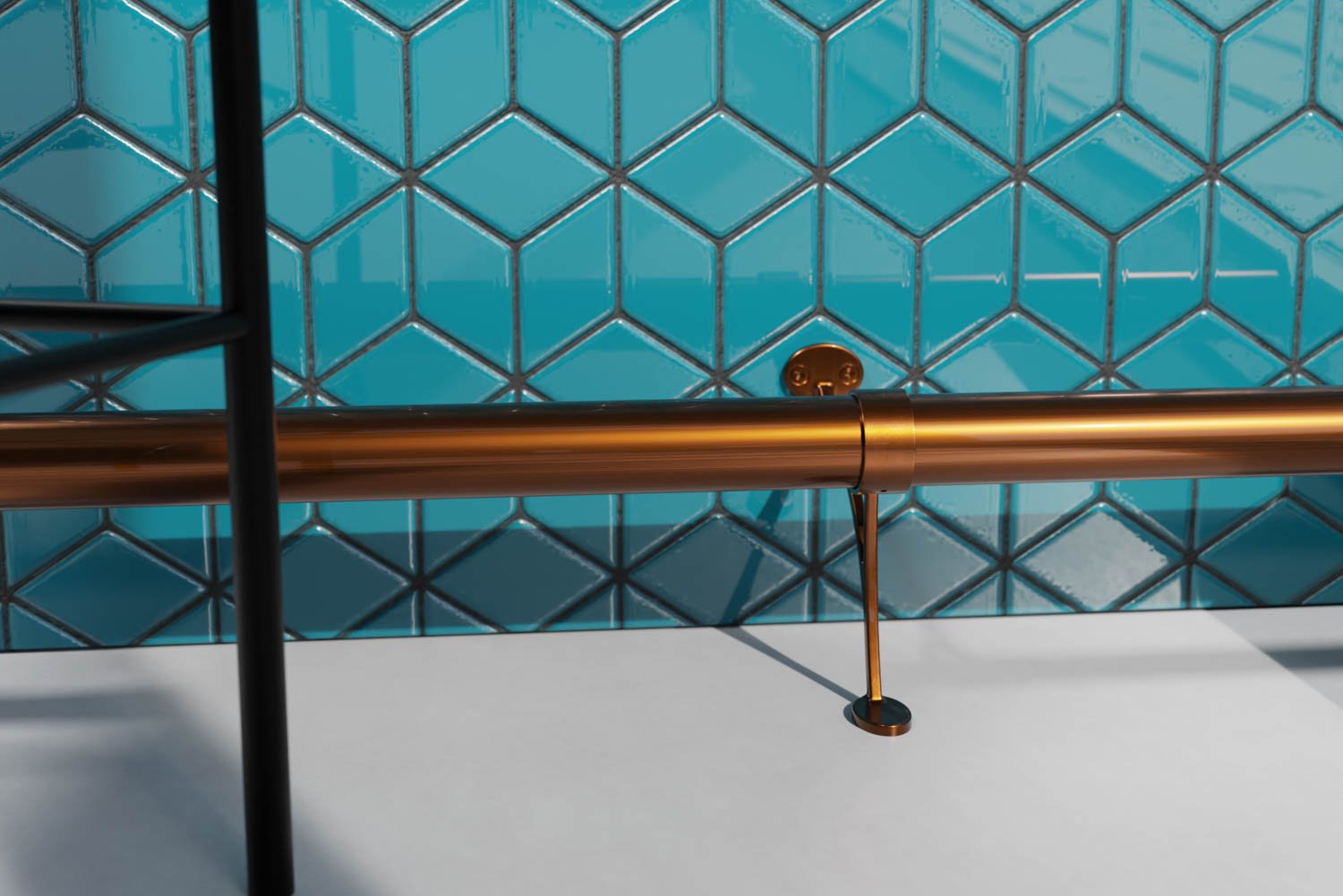
Bar foot rails are one of those details that rarely draw attention, but immediately influence how a space feels. When integrated thoughtfully, they provide a natural sense of comfort at the bar while visually grounding the overall structure.
From a design perspective, foot rails create an opportunity to reinforce material continuity across the space. Finish selection, mounting style, and proportion all contribute to how seamlessly the element fits within the broader composition. Whether the intent is to match surrounding metals or introduce subtle contrast, the decision plays a role in how cohesive the final environment feels.
Performance remains just as important. Proper placement and durable materials ensure the rail holds up in high-traffic settings without compromising the integrity of the design over time.
Explore more about bar foot rail:
Drink Rail
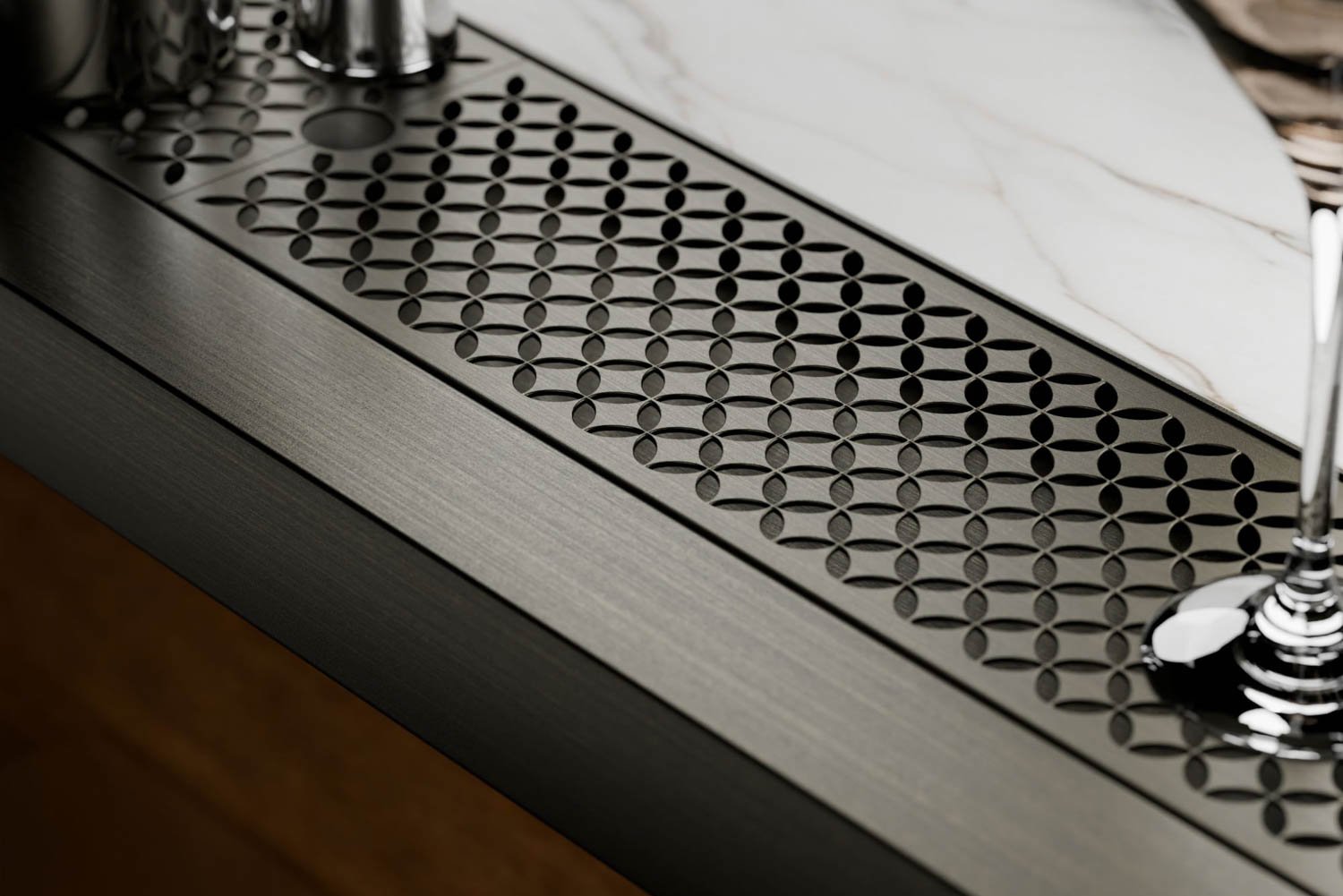
Drink rail is often approached as a purely functional feature, but when considered early in the design process, it can quietly support both the aesthetic and operational flow of a space.
It helps maintain a clean, organized bar top while guiding how guests and staff interact with the surface. When integrated into the architecture of the bar, it becomes part of the visual language rather than an added component.
Designers also have the flexibility to determine how visible or understated these elements should be. Through finish matching and form, drink rail can either blend seamlessly into the background or contribute to the overall material palette in a more intentional way.
Thoughtful specification ensures they support service efficiency without interrupting the experience the space is meant to deliver.
Explore more about drink rail:
Bar Shelving
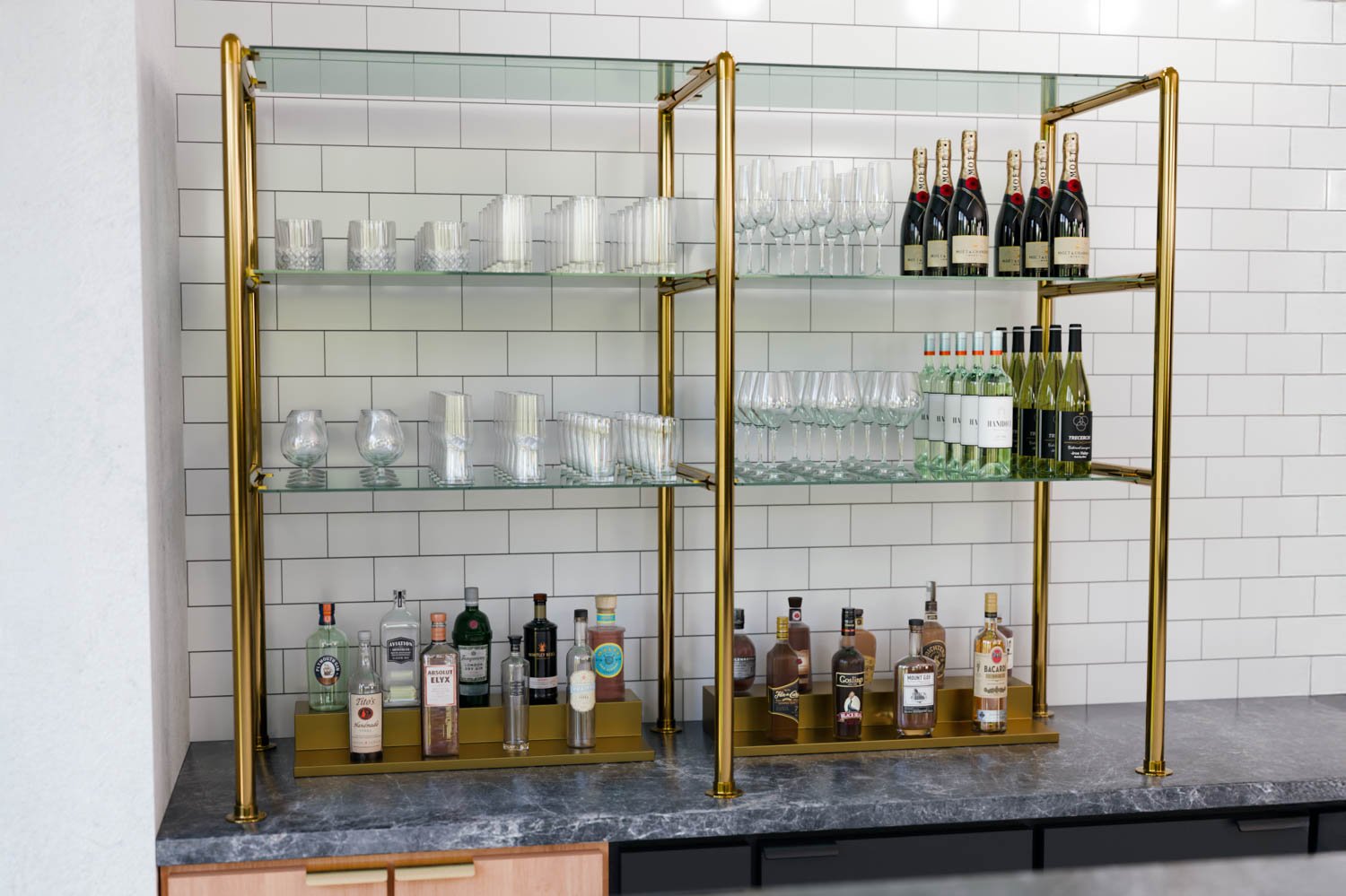
Back bars are among the most visually impactful areas in hospitality interiors. Integrating bar shelving into these spaces is not only a practical move for storage and display, but also an opportunity to reinforce the design's architectural character. Brass tubing and fittings allow designers to construct open, intentional shelving systems that elevate both utility and aesthetics.
Our French bistro-style shelving uses round tubing or square tubing to frame out shelving bays with clean lines and symmetry, ideal for showcasing glassware or curated bottle displays. For more complex or asymmetrical layouts, our rod and joint shelving system offers modular flexibility with refined brass detailing, allowing shelf heights to be adjusted around lighting or architectural elements. Designers seeking a bold architectural presence may opt for our cantilever shelving system, which features vertical posts and supportive brackets that add structure, rhythm, and surface richness to the backbar.
Explore more about shelving:
-
5 Bar Shelving Ideas Designers Use to Complete Hospitality Spaces
- Bar Shelving for Hospitality Spaces
Additional Bar Design Elements
Service rail: Service bar rail helps control the flow of patrons around the bar area to carve out an area for servers and wait staff to retrieve drinks. These curved sections of metal tubing mount to the bar top and the bar face and can be finished to match the bar foot rail and other fixtures to enhance visual appeal further.
Glass racks: Hanging glass racks are another way to organize bar areas, making it easier for staff to do their jobs while adding visual detail. These glass racks are constructed from finished steel and can be mounted easily under counters, shelves, and cabinets. Glasses neatly hang from their base, which prevents them from banging together while sitting on shelves or collecting dust and debris in the bowl for a more hygienic way to store stemware.
Purse and coat hooks: These are often overlooked features that enhance any bar design. These hooks give guests a convenient place to hang their belongings, making their visit more comfortable and enjoyable. Available in finishes that match perfectly with our bar foot rail and other architectural metal products, they ensure a cohesive and polished look. This simple addition elevates a bar’s functionality while keeping its aesthetics on point.
Tipping rail: Also known as gallery rail, tipping rail is a thin brass decorative rail installed along the edge of shelves. It also prevents items like glassware and bottles from falling. This is set up with the brass rail supported by center and end posts to construct the tipping rail.
Materials and finishes for architectural metal
Selecting the appropriate metal finish is crucial in bar design, as it influences both the aesthetic appeal and durability of the space. Different finishes offer varying levels of sheen, texture, and maintenance requirements, allowing designers to tailor the look and functionality to their specific needs.
Architectural Metal Materials
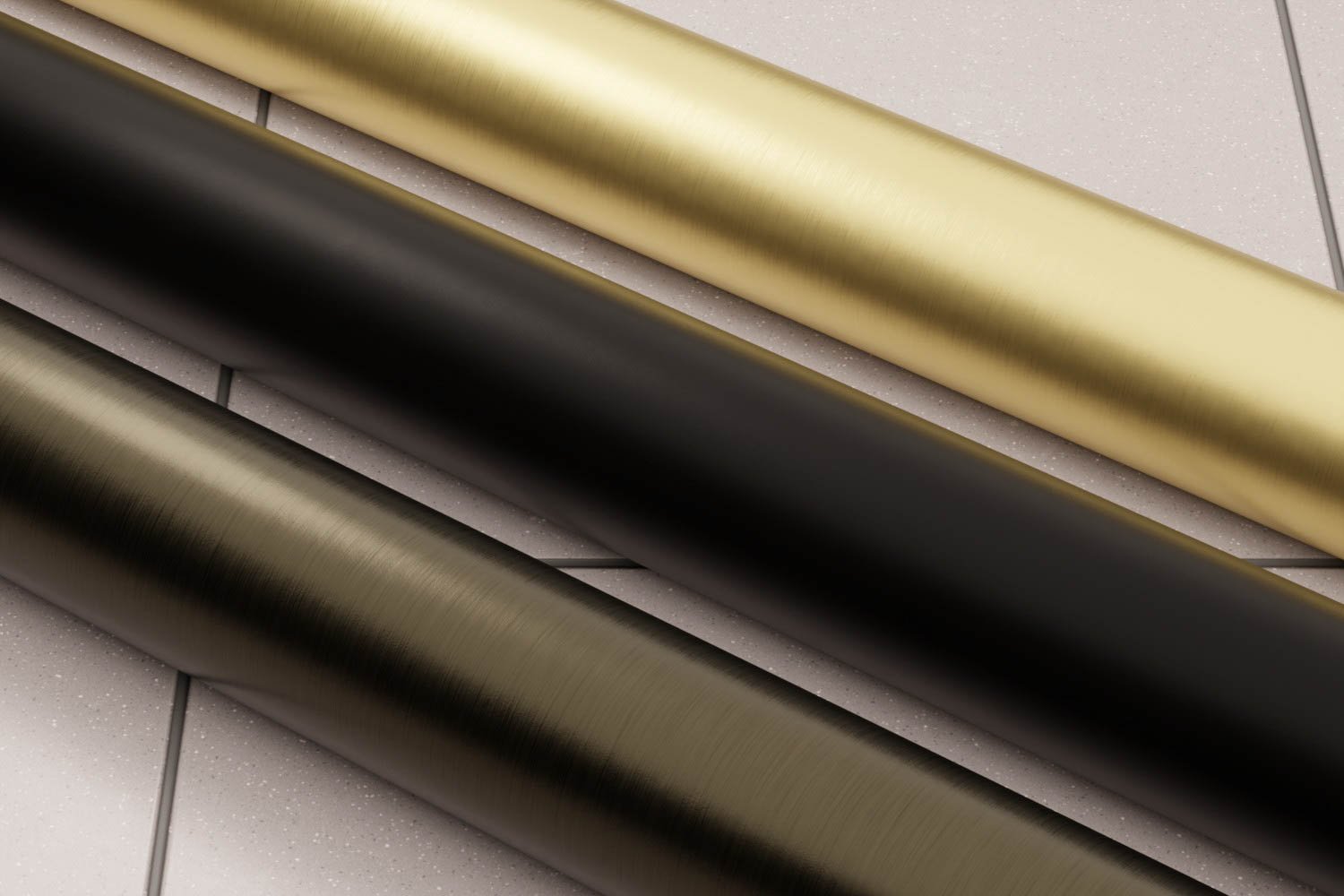
The two standard materials for architectural metal components used in bar and hospitality projects are brass and stainless steel.
Brass has been used in bars for over 200 years to add a touch of class, whether in foot rails, shelving, or decorative applications such as top rails and handrails. Adding to its appeal is its ability to develop a patina when exposed to the elements over time. Designers and others desire this look to create an aged or vintage aesthetic. Those looking to avoid brass patina have options, including applying a protective clear coat to maintain the material’s sheen and luster.
More recently, stainless steel has become an affordable and durable option for architectural metal in bar areas. Its bare surface can be exposed with a polished or brushed finish, or an exterior finish can be applied, which affords designers nearly unlimited options when it comes to colors or metallic finishes.
Common Metal Finishes in Bar Design
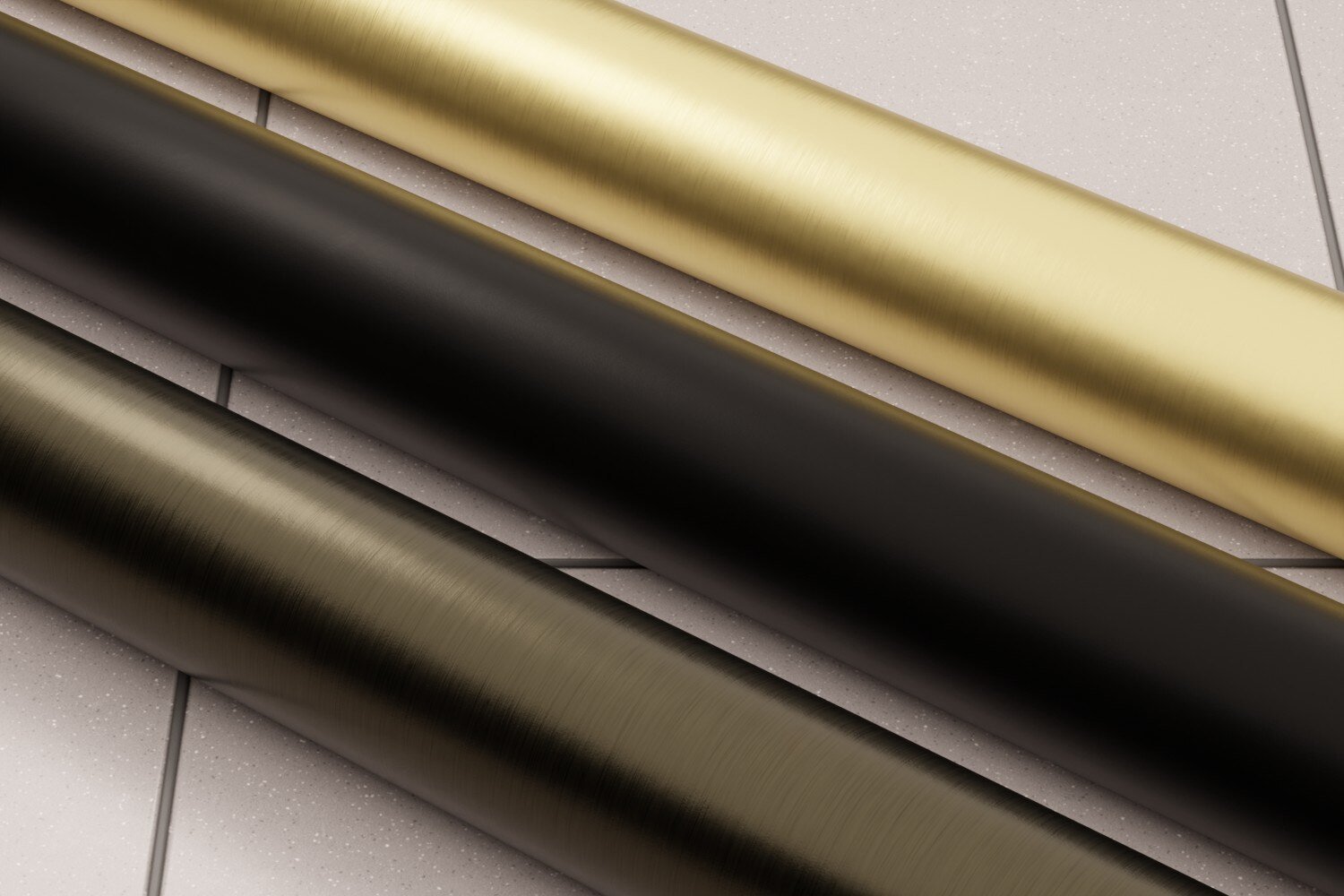
Brushed and polished metal
Polished metal finishes are achieved by buffing the metal to a high shine, resulting in a reflective surface. This process can create either the timeless look of polished brass or the sleek and modern look of stainless steel, enhancing the brightness of the bar area. However, it requires regular cleaning to maintain its luster and is more prone to showing fingerprints and smudges.
Brushed finishes are created by brushing the metal with an abrasive to produce a satin-like texture with fine lines. This finish provides a subdued, matte look that adds sophistication to any bar design. Additionally, brushed finishes are more forgiving of scratches and fingerprints, making them easier to maintain over time.
Powder coating and electroplating
Powder coating involves applying a dry powder to the metal surface, which is then cured under heat to form a protective layer. Powder-coated finishes are available in a wide range of colors, offering extensive customization options. They are also highly durable and resistant to chipping, scratching, and fading, requiring minimal upkeep.
Electroplating is a process that uses electrical current to deposit a thin layer of metal onto the surface of another metal. This technique can achieve various finishes, including pewter, copper, and antique-appearing metals, providing a premium look. Electroplated finishes offer enhanced corrosion resistance but may require periodic cleaning to maintain their appearance.
Choosing the right metal finish means balancing style and durability. The finish should match the bar's design while holding up to daily use. By selecting the right materials and finishes, designers can create a beautiful bar space that is both functional and easy to maintain.
Learn more:
Architectural metal installation made easy
Installing bar foot rail and drink rail is a straightforward process that enhances both the look and functionality of a bar. Proper planning ensures a seamless installation, preventing common mistakes like incorrect measurements or improperly aligned components. Whether you're installing a foot rail for guest comfort or adding a drink rail to protect bar tops and improve service efficiency, following best practices is key. For detailed step-by-step instructions, refer to our comprehensive guides:
Design tools for architectural metal projects
Kegworks has a collection of resources to help designers, architects, and millworkers use our architectural metal, whether specifying it in designs or ordering it for installation. Use these to help plan your architectural metal projects with confidence.
- 3D Visualizer: Our 3D design tool lets you envision your project with lifelike realism. Choose from bar foot rail, drink rail, or shelving and see it in various finishes and settings.
- Product Spec Sheets: Detailed drawings of our architectural metal components to help with your designs.
- Revit Files: We carry Revit files of our architectural metal components to help you create drawings, designs, and models. Contact your Kegworks representative to request Revit files for your next project.
Customization Options for Kegworks Architectural Metal
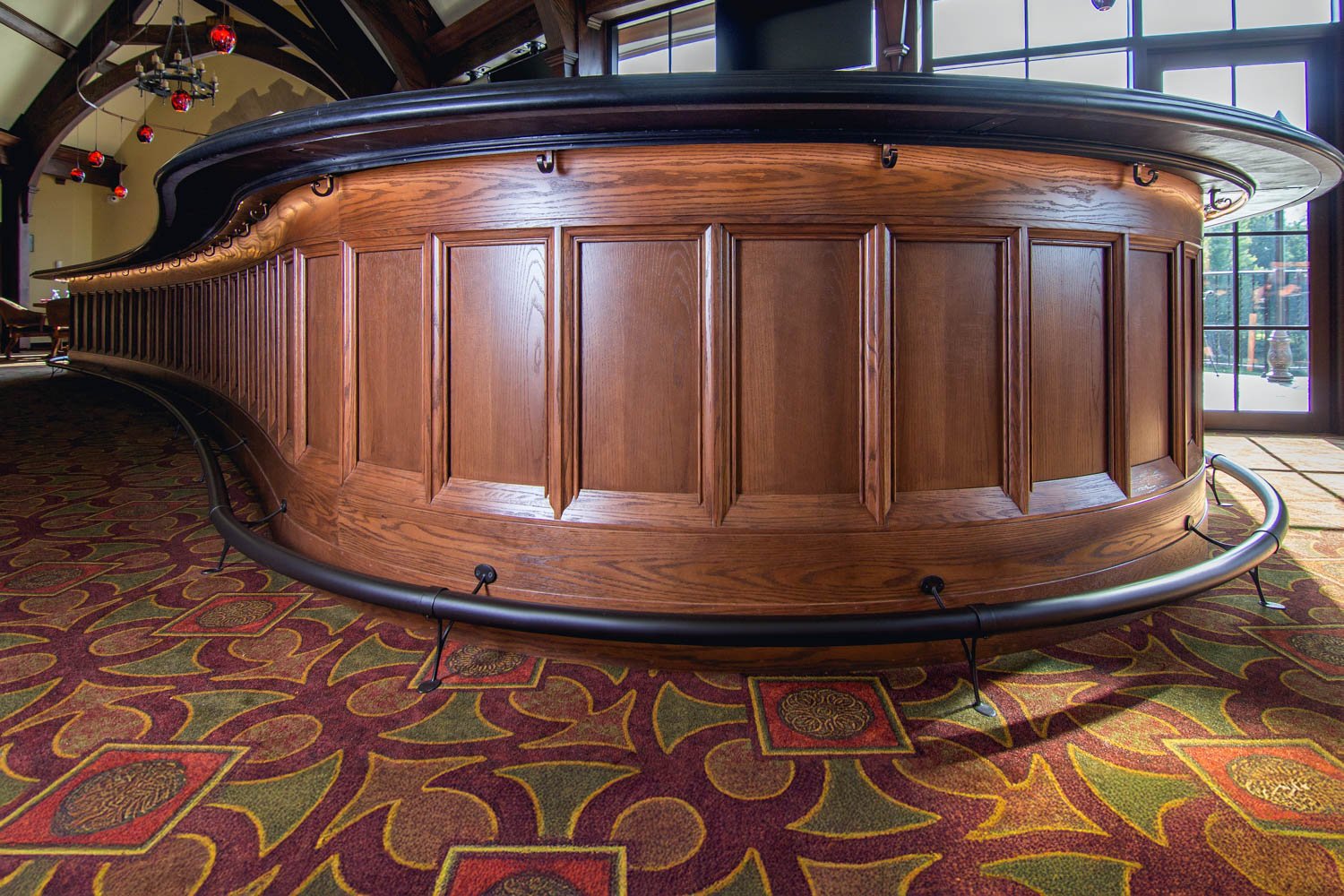
With our experienced fabrication team and network of resources, Kegworks is the leader in the fabrication and finishing of metals for hospitality spaces. We offer a variety of custom solutions for architectural metal, including bar foot rail and drink rail systems.
- Custom Radius: Our fabricators use specialized machinery to roll and bend bar foot rail tubing and drink rail to exact specifications for curved bar layouts.
- Custom Finish: Kegworks can match virtually any tone through powder coating or electroplating metallic finishes when it comes to finishing metals. We can also finish brass or stainless steel with a clear coat or other protective coating to prevent damage from moisture and the elements.
- Custom Fabrication: Besides working with drink rail and bar rail systems, we can help fabricate custom metal projects ranging from custom bar rail brackets to one-of-a-kind items. Just provide us with the drawings and specifications, and we’ll take it from there.
With our commitment to quality and precision, Kegworks ensures that every custom metal project meets the highest standards. No matter the scope of your project, we provide expert support and efficient production to help you achieve the perfect final result. Request a custom quote to start a conversation with our sales team.
Architectural metal is more than just an aesthetic choice. It’s an essential element of functional and inviting bar spaces. Whether designing a high-end restaurant, a hotel bar, or a stadium lounge, Kegworks provides the expertise, materials, and customization options you need to achieve your vision. Contact us today to discuss your project and explore our range of premium bar components.

Dave Buchanan
Dave Buchanan has been the Content Writer for Kegworks since June 2019. He has a fondness for craft beer that developed while working for a local beer distributor. Dave also worked for an area sports talk radio station for several years, and continues his broadcasting work as a motorsports announcer and indoor lacrosse reporter.
Leave a Comment